
Table of Contents
- Spring Pressure Washing In Skipton: Key Takeaways
- Why Spring Exterior Cleaning Matters Around Skipton
- How To Work Through This Spring Checklist
- Driveways, Paths And Parking Areas
- Patios, Yards And Garden Paths
- Decking, Fences And Timber Surfaces
- Roofs, Moss, Algae And Treatments
- Gutters, Fascias, Soffits And Downpipes
- Walls, Render, Windows And Conservatories
- Choose The Right Wash Method For Each Surface
- Spring Washing: Common Questions
- Your Next Step For A Cleaner Spring
Green staining, slippery boards, blocked gutters. A surface-by-surface spring reset deals with the winter build-up before outdoor spaces get busy again.
Spring pressure washing in Skipton works best when each area gets the right treatment: pressure for hard paving, gentle cleaning for delicate finishes, and biocide where algae, moss or lichen needs controlling. Damp weather leaves drives, patios and paths looking tired and can make them unsafe underfoot. A clean exterior also changes the first impression of a home, shop or workplace. Use the checklist below to inspect drives, patios, decking, roofs, gutters, walls and glass in the right order.
Spring Pressure Washing In Skipton: Key Takeaways
Start with a daylight walk around the property, then work through the surfaces that need attention.
- Check drives, patios, paths, decking, walls, roofs, gutters, fascias, windows and conservatories for green growth, dark marks and slippery areas.
- Move vehicles, furniture, bins and delicate pots before washing, and keep pets away while surfaces are being cleaned and dried.
- Match the method to the surface: use pressure washing on tough paving, soft washing on roofs and render, and steam where stone or render needs extra care.
- Wash away grime first, then treat persistent algae, lichen and black spots with biocide to slow their return.
- Clear gutters and downpipes before cleaning walls and windows below, so dirty overflow does not spoil finished work.
- End with a daylight inspection, a check of gutter flow and a simple maintenance rhythm for the year.
Why Spring Exterior Cleaning Matters Around Skipton
Winter Growth Shows Up Fast
A Skipton driveway can pick up green moss, dark spots and grime through a damp winter. Patios, paths, decking and roof tiles hold moisture too, giving algae, lichen and mildew time to settle into the surface.
That growth affects more than appearance. Mossy paths and decking can feel slippery underfoot, while staining can stay on paving, timber, render and tiles if it is left season after season. A spring clean removes the build-up while outdoor areas are becoming part of daily life again.
For homes, the difference shows at the front door, along the driveway and around the garden. For a business, it starts at the entrance, forecourt or car park. The Under Pressure pressure washing guide for Skipton also focuses on the value of cleaning hard exterior surfaces that collect winter grime.
Regular care gives each surface a better chance of staying presentable and usable. It also makes small trouble spots easier to see, such as a patch of algae beside a step, a blocked downpipe or a section of loose moss on the roof.
Example
A homeowner finds that a split-level deck has become slippery after winter and avoids using it. After a gentle clean and protective oil, the boards look close to new and regain a safer feel underfoot.
- Before: algae and grime hold dampness on the boards.
- After: the cleaned, dried deck has a protective finish.
The change works because the work deals with both the surface growth and the timber’s need for aftercare.
How To Work Through This Spring Checklist
Work from the highest areas down, and inspect everything in daylight before water goes anywhere near the property. A quick walk around gives you a clear list of moss, stains, blocked gutters, slippery spots and awkward access points.
- Walk the drive, paths, patio and garden, then look up at gutters, fascias, roof tiles, walls and windows. Make a note of black spots, oily marks, overflowing gutters and areas where people could slip.
- Clear the work area. Move cars, bins, furniture and delicate pots, and make sure side passages, drive entrances and garden gates are accessible.
- Check the external water tap and plan hose routes away from walkways. Keep pets indoors or away from the cleaning and drying area.
- Arrange an assessment for high glass, roof work, large driveways, commercial frontages or surfaces where the correct method is unclear. The visit can set the scope, cleaning method and timing before work starts.
- Clean in a sensible order: roofline first, then walls and hard surfaces, then windows and conservatories. This avoids dirty runoff landing on an area that has already been finished.
- Inspect the result in daylight. Look for missed moss in joints, uneven patches on paving, streaks on glass and clear flow through gutters and downpipes.
A proper finish includes approval of the work and a note of any touch-ups or future maintenance. That small final check stops a spring reset turning into a rushed rinse.
Keep this preparation list handy:
- Clear access to drives, side passages, gardens and entrances.
- Make an external water tap available.
- Move or cover vehicles, furniture, bins and delicate pots.
- Keep pets away from active cleaning areas.
- Flag problem areas before work begins.
For a large or high-level area, an assessment is the sensible place to settle the method before cleaning starts.
Driveways, Paths And Parking Areas
Oil marks and moss need different attention. Drives, paths and parking areas are hard-wearing, but block paving, concrete, tarmac and stone still need pressure matched to the material.
How It Works
Start by checking for tyre marks, oil, moss, weeds, loose jointing material and settlement dips. A block-paved drive with wide joints or uneven areas needs steady, even work so the finish does not look striped.
- Remove vehicles, bins and loose debris from the area.
- Identify the paving material and the dirtiest marks before choosing the pressure level.
- Clean in controlled passes, keeping the lance moving evenly across the surface.
- Direct runoff away from planting and avoid pushing grime into drains or garden beds.
- Check the cleaned area for remaining moss, weeds, oil marks and uneven-looking sections.
The Under Pressure guide for Skipton covers the kind of hard-surface cleaning needed on local drives and paved areas. Parking areas also need attention where moss and oily marks affect the welcome and footing for visitors.
Use this check before arranging the work:
- Identify block paving, concrete, tarmac or stone.
- Mark oil and tyre marks separately from moss and weeds.
- Look for dips, loose joints and damaged edges.
- Keep cars and foot traffic out of the work area.
- Protect nearby planting from runoff.
What It Replaces
This replaces the patchy result of a quick rinse and the manual scrubbing that often leaves ingrained dirt, tyre marks and moss behind. It also removes the need to guess at one pressure setting for every hard surface.
A driveway or car park needs a clean, even finish, especially where visitors walk from their vehicle to the door.
Patios, Yards And Garden Paths
Black spots tend to hold on. Patios, paved yards and garden paths gather weathering, moss, algae and dirt in corners, joints and shaded areas through winter.
How It Works
Stone, brick and slab patios need a careful inspection before cleaning, especially around worn edges and planting. The aim is to remove surface grime evenly, then treat deep organic staining where it remains.
- Clear furniture, pots, toys and loose leaves from the patio or yard.
- Check for black spots, lichen, moss and slippery shaded sections.
- Wash the paving in steady passes suited to its material and condition.
- Apply biocide foam after washing where algae, lichen or black spots need treatment.
- Allow the area to dry before returning furniture or letting pets use the space.
The Under Pressure page in Skipton shows the broad range of exterior areas that can collect this sort of winter build-up. Concrete and flagged yards used by pets often benefit from the same clear-out, especially where dirt and green growth have settled into the surface.
Check these areas closely:
- Patio joints and shaded corners.
- Steps and garden paths used every day.
- Brick, stone and slab surfaces with dark marks.
- Concrete or flagged pet-owner yards.
- Edges beside lawns and beds where runoff needs control.
What It Replaces
This replaces repeated spot-scrubbing and the short-lived clean that leaves black spots or lichen untreated. Biocide treatment follows the wash to deal with remaining organic growth and slow its return.
Clean paths also give guests and household members a safer route through the garden.
Decking, Fences And Timber Surfaces
Deck boards tell the story quickly. Algae, mildew and damp grime can leave timber looking grey, faded and slippery by spring, while composite boards also collect surface growth.

How It Works
Decking needs a gentler approach than concrete paving. The condition, age and exposure of timber should shape the cleaning plan, then the boards need time to dry before protective oil is applied.
- Remove furniture, planters and loose debris from the deck.
- Check boards, steps and handrails for algae, mildew, fading and slippery patches.
- Clean wood or composite with a gentle method that respects the surface.
- Let timber dry after cleaning.
- Finish timber decking with protective oil to restore colour and guard it against weather.
The WoodCareUK timber care resource is a useful reference for looking after exterior timber. Fences deserve the same spring check, whether they are wood, metal, composite or vinyl, because algae and grime can dull their finish.
Look for these signs:
- Green algae on boards, steps and rails.
- Mildew or grime in grooves and board gaps.
- Fading timber that needs an oil finish.
- Slippery areas where the deck stays damp.
- Fence panels with algae staining or a dulled colour.
What It Replaces
This replaces aggressive washing that can harm timber and a rinse-only approach that leaves boards exposed after cleaning. The oil finish provides the aftercare needed once the deck is clean and dry.
A neglected multi-level deck can become difficult to use safely. Gentle restoration brings the outdoor space back into use without treating it like hard paving.
Roofs, Moss, Algae And Treatments
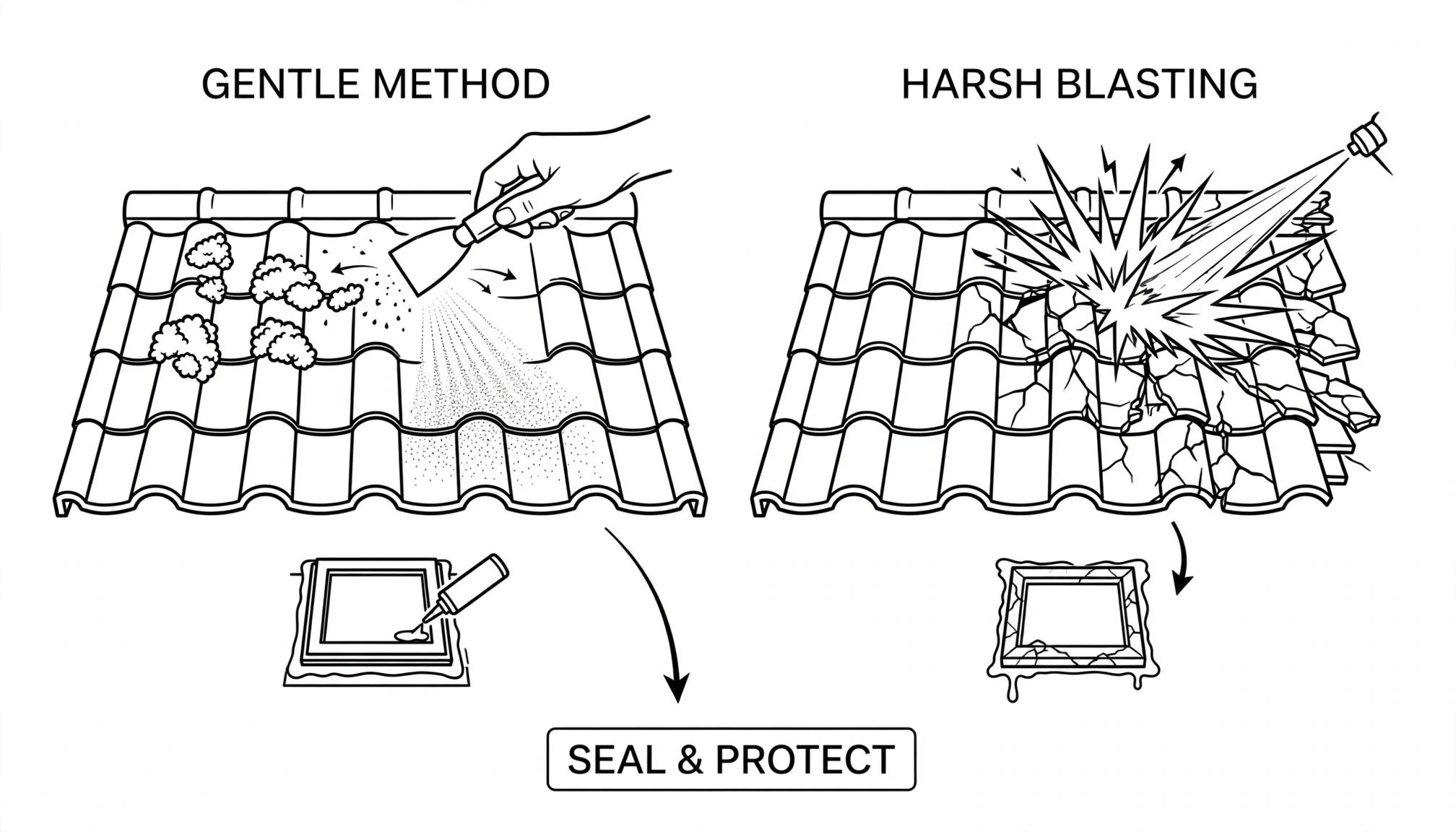
Roof moss needs patience. Tiles can hold moss and grime for months, and harsh pressure can harm the roof surface instead of solving the problem.
How It Works
Start with a visual check from ground level for moss build-up, staining, blocked valleys, dirty skylights and areas where roofline overflow is likely. Roof cleaning should protect the tiles throughout the process.
- Inspect tiles, ridges, valleys, gutters and skylights for moss and staining.
- Remove roof moss by careful hand scraping rather than blasting tiles with high pressure.
- Apply a biocide soft wash to kill remaining moss, algae and lichen.
- Clean skylights gently so grime does not keep cutting down daylight.
- Discuss sealing on tired roofs where a treatment is needed to support waterproofing.
- Finish by clearing moss and debris from gutters and downpipes.
Use this roof check in spring:
- Look for moss on tiles and around roof valleys.
- Watch for staining below gutters and downpipes.
- Check skylights for dirt and moss around their edges.
- Flag tired roof areas for a conversation about sealing.
- Keep roof access and nearby ground areas clear.
What It Replaces
This replaces harsh roof blasting and repeated attempts to remove moss without dealing with remaining growth. Hand scraping followed by biocide treatment cleans the roof while protecting the tile finish.
Roofline work also prevents moss clumps from reaching the gutters just after they have been cleared.
Gutters, Fascias, Soffits And Downpipes
Overflow leaves a clue. Green-stained fascias, damp patches and water spilling over a gutter line point to leaves, moss or sludge stopping water from draining properly.
How It Works
Gutters should be dealt with before walls, windows and conservatories below them. Once the channels and downpipes are clear, the roofline can be washed so bright trim is not spoiled by later debris.
- Inspect gutters for leaves, moss clumps and standing sludge.
- Clear the channels and downpipes so water has a clear route away.
- Check flow after clearing.
- Wash fascias, soffits and cladding to remove dirt, stains and algae.
- Record any repair needs or places that need routine clearing.
Check the roofline for:
- Leaves and moss caught in gutter channels.
- Sludge at outlets and downpipe openings.
- Overflow marks on fascias and walls.
- Green algae on soffits and cladding.
- Damp patches beneath the roof edge.
What It Replaces
This replaces clearing only the visible gutter edge while leaving the downpipe blocked, plus the repeated cleaning of stains caused by overflow. A flow check confirms that the cleaning has dealt with the drainage problem as well as the appearance.
Regular roofline care keeps water moving where it should and makes future checks quicker.
Walls, Render, Windows And Conservatories
Render needs a light touch. Brick, stone and render can all show moss, mildew and weather staining, while windows and conservatories need a clean finish without harsh treatment.
Exterior cleaning here is really about washing and treating those surfaces to lift dirt, grime and organic growth, not just hosing them down. On walls that means dealing with green staining, mildew and moss that cling to brick, render and stone, and doing it without harming finishes that are easy to scar.
How It Works
Begin by separating hard, durable surfaces from delicate ones. Render and conservatory roofs should be treated gently, and delicate stone can need steam rather than pressure.
That split matters because what suits tough paving will damage a wall. Soft washing uses low pressure with specialist solutions and biocide to kill algae, moss and lichen on render and walls, so growth dies back instead of just being blasted off the surface. Steam uses high-temperature vapour for delicate stone and render where pressure could etch or loosen the finish, which gives gentle but effective cleaning where you need to be careful.
- Inspect walls for green staining, mildew, moss and dark runoff marks.
- Use soft washing on render and walls where low pressure plus specialist solutions can kill organic growth.
- Use steam on delicate stone or render where pressure could etch or loosen the finish.
- Rinse windows, frames, sills and conservatory roofs with gentle methods.
- Use a pure-water system for a streak-free glass finish.
- Check the finished walls and glass in daylight for missed stains or streaks.
It helps to walk the property in daylight first and note where walls, windows and the roofline show green growth, dark spots or runoff marks. Clogged gutters and stained fascias can lead to overflow and damp, so it makes sense to get the roofline flowing clear before you wash walls and glass below.
Apply these decisions before work begins:
- If a wall is rendered, then use soft washing rather than high pressure.
- If stone is delicate, then choose steam cleaning where pressure could cause harm.
- If windows or conservatory panels need cleaning, then use gentle rinsing and pure water for the final finish.
- If staining starts beneath a gutter, then clear the roofline before washing the wall.
Conservatory roofs, frames and sills all need that same soft, gentle care. Pure water window systems suit homes and commercial frontages because they rinse frames and glass clean and leave a streak-free finish without harsh scrubbing by hand.
What It Replaces
This replaces blasting render, scrubbing glass by hand and leaving conservatory frames or sills as an afterthought. Gentle cleaning protects the finish while pure water deals with the final streak-free glass work.
Blasting render or soft stone with high pressure can scar finishes and shorten surface life, and skipping that daylight check means missed patches and streaks get left behind. Finish with a walk-around in good light, compare before and after areas, and approve the result.
For a home with a conservatory, the gain is visible across the roof panels, frames, sills and windows at once.
Choose The Right Wash Method For Each Surface
Pressure washing wins on tough paving, soft washing suits growth on roofs and render, and steam is the safer route for delicate stone or sensitive finishes. The method should follow the surface, not the other way round.

| Method | Best for | What it does |
|---|---|---|
| Pressure washing | Block paving, concrete, tarmac, hard stone | Lifts oil, tyre marks, moss and built-up grime |
| Soft washing | Roofs, render, walls, conservatories | Uses low pressure and specialist solutions to kill growth |
| Steam cleaning | Delicate stone, sensitive render | Uses high-temperature vapour where pressure could harm surfaces |
Use pressure washing for drives, patios, paths, yards and parking areas where the surface can take it. Steady passes help prevent striping, while runoff needs directing away from planting and finished areas.
Use soft washing for roof tiles, render, walls and conservatory surfaces. It combines low pressure with specialist solutions and biocide, which matters where algae, moss and lichen need treating after the visible dirt has gone.
Use steam for delicate stone and render where water pressure could etch, scar or loosen the surface.
Follow these rules:
- If paving is hard and heavily soiled, then use pressure washing matched to the material.
- If a roof carries moss, then scrape gently and follow with a biocide soft wash.
- If render shows algae, then choose soft washing.
- If stone is delicate, then choose steam cleaning.
- If decking feels slippery or faded, then clean gently and finish timber with protective oil.
- If a frontage or car park stays busy, then plan the work in phases to keep entrances usable.
The right method protects the surface while dealing with the grime that made spring cleaning necessary.
Spring Washing: Common Questions
What Areas Can Be Cleaned?
A spring visit can cover drives, patios, paths, yards, decking, fences, roofs, gutters, fascias, walls, windows and conservatories. Commercial forecourts, shopfronts and car parks can also be planned around customer access.
Is Pressure Washing Safe for Render?
High pressure is not the right choice for render. Soft washing uses low pressure with specialist solutions and biocide to remove and treat algae, moss and mildew without harming the finish.
How Should Roof Moss Be Removed?
Roof moss should be removed by careful hand scraping, followed by a biocide soft wash. This protects tiles and kills remaining growth without harsh blasting.
What Access Is Needed?
Clear access to the area, an external water tap and safe hose routes help work run smoothly. Move vehicles, furniture, bins and delicate pots, and keep pets away while cleaning and drying takes place.
Why Do Black Spots Return?
Black spots can return if algae, lichen or moss is rinsed away without follow-up treatment. Biocide foam after washing treats deep organic staining and slows regrowth.
How Do You Treat Slippery Decking?
Decking needs gentle cleaning to remove algae, mildew and grime. Once timber is dry, protective oil restores colour and gives the boards weather protection.
Your Next Step For A Cleaner Spring
Start with the daylight walk, then deal with the highest and most urgent areas first. Clear gutters, treat slippery paths and decking, and choose gentle methods for roofs, render and delicate stone.
For a large drive, a moss-covered roof or hard-to-reach roofline, arrange an assessment so the scope, method and timing are clear before work begins. Finish with a daylight inspection and keep a simple maintenance rhythm through the year.