
Table of Contents
- Exterior Cleaning Frequency at a Glance
- Why Yorkshire Weather Demands Regular Exterior Cleaning
- How Often Should You Clean Each Surface Around Your Home?
- What Are the Signs Your Driveway or Patio Is Overdue?
- What Affects Cleaning Frequency in Skipton and the Dales?
- Pressure Washing Versus Soft Washing: Which Does Your Home Need?
- How Much Does Professional Exterior Cleaning Cost in Skipton?
- How to Choose a Reliable Pressure Washing Service in Skipton
- Skipton Exterior Cleaning Questions
- How Often Should a Skipton Driveway Be Cleaned?
- How Often Does Garden Decking Need Restoration and Oiling?
- Is Washing Safe for Natural Stone, Tarmac and Resin?
- What Do Local Costs and Job Times Typically Look Like?
- When Is Biocide Foam Needed for Black Spots?
- How Do You Pick a Trustworthy Local Exterior Cleaner?
- Keep Your Skipton Home Looking Its Best Year-Round
Yearly washing keeps most Skipton drives, patios and decking in good shape.
Damp air off the Dales feeds moss, algae and black lichen spots between visits, so a planned clean beats a rescue job. Jet washing around Skipton averages £294, which shows why steady upkeep costs less stress than letting growth take hold. Below you get the timing for each surface, the signs you are overdue, local costs and how to pick a team.
Exterior Cleaning Frequency at a Glance
Most Skipton homes stay on top of growth with one planned visit per year.
- Drives, patios and paths washed each year, with biocide foam on areas marked by algae and black lichen
- Decking checked each year, with a full restoration and protective oiling when timber looks grey or slick
- Render, roofs and cladding cleaned by soft washing instead of high pressure
- Shopfronts, forecourts, car parks and footpaths cleaned more often because footfall soils them fast
- Book by free no-obligation quote with a walk-round check and re-clean cover if the finish falls short
Why Yorkshire Weather Demands Regular Exterior Cleaning
Rain does most of the work in Skipton.
Damp stone, shaded flags and north-facing paths hold moisture for days, and that moisture feeds moss, weeds, algae, lichens and hard black spots. You see it first as a green film, then as dark patches that stay put after rain. Timber goes grey and slick underfoot at the same time.
That slick layer is a safety point. Paths, patios and decking lose grip when wet, and shaded corners near trees or fences turn first. A fall on stone steps or a sloped drive costs far more than a wash.
Looks count too. The drive and front path shape what visitors and neighbours see before they reach your door. Oil marks, dull colour and weedy joints drag down even a tidy house.
Routine washing guards the surface itself. Growth traps water in joints and pores, which wears pointing, stains flags and shortens timber life. Clearing it each year keeps water moving off the surface.
Tip: pair the wash with biocide foam on problem patches so deep organic staining clears fully instead of fading for a month.
A set maintenance plan wins here. One date in the diary each spring or summer holds the line, while waiting three years turns the same job into a full restoration.
How Often Should You Clean Each Surface Around Your Home?
Most surfaces around a Skipton home land on a yearly cycle.
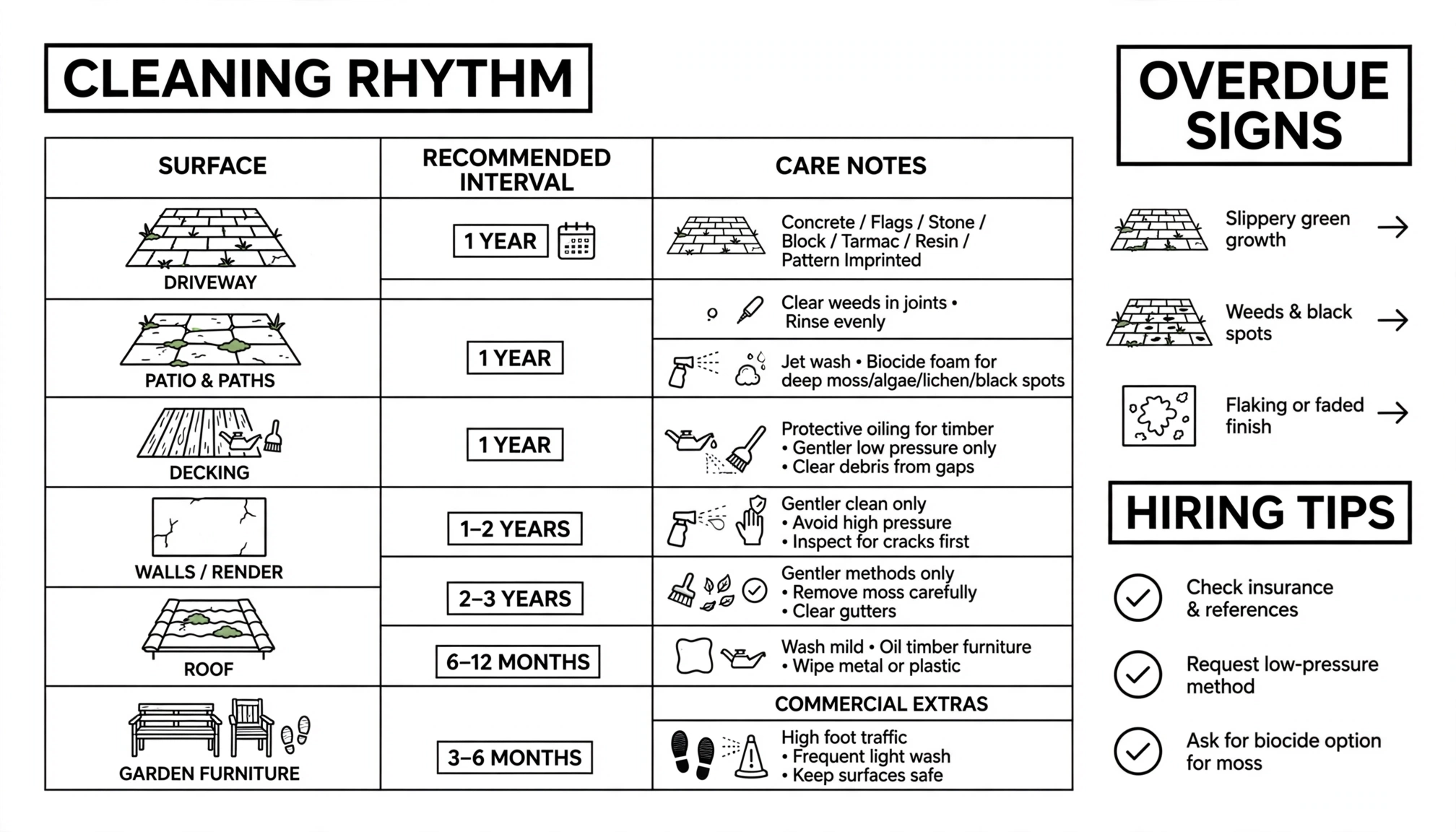
Shade, trees, traffic and stone type shift the date by a few months, but the visual cues stay the same. Clean when colour dulls, joints green up or grip drops.
Driveways
Block paving, concrete flags, natural stone, tarmac, crazy paving, resin and pattern imprinted concrete all sit out in Dales weather all year. Plan a professional wash once a year, brought forward if the drive sits under trees or faces north.
Block paving needs joint care with the wash, since moss and weeds loosen sand and trap water. Natural stone needs controlled pressure to protect texture and pointing. Tarmac, resin and pattern imprinted concrete need gentler settings to avoid marking, so flag the surface when you book.
- Clear cars and bins before the visit
- Ask for joint sand top-up notes on block paving
- Note oil spots and settled blocks in advance
- Agree water access from an outside tap
A drive near Leeds Bradford Airport showed the payoff after years of layered dirt, oil and moss lifted to near-new colour in one deep visit.
Patios
Indian sandstone and other Yorkshire flags green up fast in shade. Book jet washing once a year, often late spring when growth shows clearly.
The wash lifts everyday grime, moss and weeds from joints. Deep algae and black lichen spots that stay after rinsing need biocide foam as a follow-on. That extra pass reaches into pores where water alone leaves dark dots behind.
- Sweep off loose leaves and pots first
- Mark drainage points and nearby planting
- Ask for biocide on black spots and green films
- Let the stone dry fully before judging colour
A Mediterranean-style patio behind a brick semi in the area came back into view only after detailed cleaning stripped seasons of film.
Paths and Steps
Paths soil like patios but wear faster because feet grind grit into the surface. Wash them with the patio each year, and sooner if a shaded side path feels slick in winter.
Steps merit a closer look. Noses and shaded treads grow algae first. Keep them clear for grip, not just looks.
Use the same yearly wash plus spot biocide where green returns. The grip underfoot tells you when to pull the date forward.
Decking
Decking needs a yearly check and a full restoration when it turns grey, dull or slippery. A split-level deck left for several seasons in this area turned slick enough to need both cleaning and re-oiling before it felt safe again.
Restoration pairs a deep clean with protection. Local practice seals revived timber with two coats of quality decking oil to bring back colour and guard against weather. That oiled finish then sheds water through the next wet season.
- Check grip after rain each autumn
- Book restoration at the first grey, slick signs
- Allow drying time before oiling
- Keep planters off boards through winter
Do not wait until boards turn slippery. Early action keeps the boards sound and the oiling even.
Walls, Fences and Garden Furniture
Garden walls, fencing and furniture pick up the same green film as paving. Wash walls and furniture once a year with the patio, using lower pressure on paint, render and softwood.
A garden wall left dull and green looked fresh again after power washing stripped the film in one pass. Furniture dries faster after a wash if you leave air gaps between pieces.
- Move pots and cushions off the area
- Note loose mortar and flaky paint
- Rinse planting nearby after detergents
Render, Roofs and Cladding
High pressure marks these finishes, so ask for soft washing. Low pressure with cleaning solutions clears growth without scarring render or lifting roof granules.
Book when streaks, green patches or dark runs appear, often every one to two years based on aspect and tree cover. Shaded gables soil first.
The Under Pressure service page sets out which finishes suit this softer approach.
Shops and Other Commercial Areas
Homes centre on drives, patios, decking and paths. Shops and cafes add shopfronts, forecourts, car parks, footpaths and playgrounds, and foot traffic soils them faster.
A small cafe site in Ilkley booked exterior cleaning for customer-facing areas to hold a strong first impression through the day. Plan these cleans around opening hours to limit disruption, with tighter gaps than a home.
What Are the Signs Your Driveway or Patio Is Overdue?
Green film that stays after rain means the clean is due.
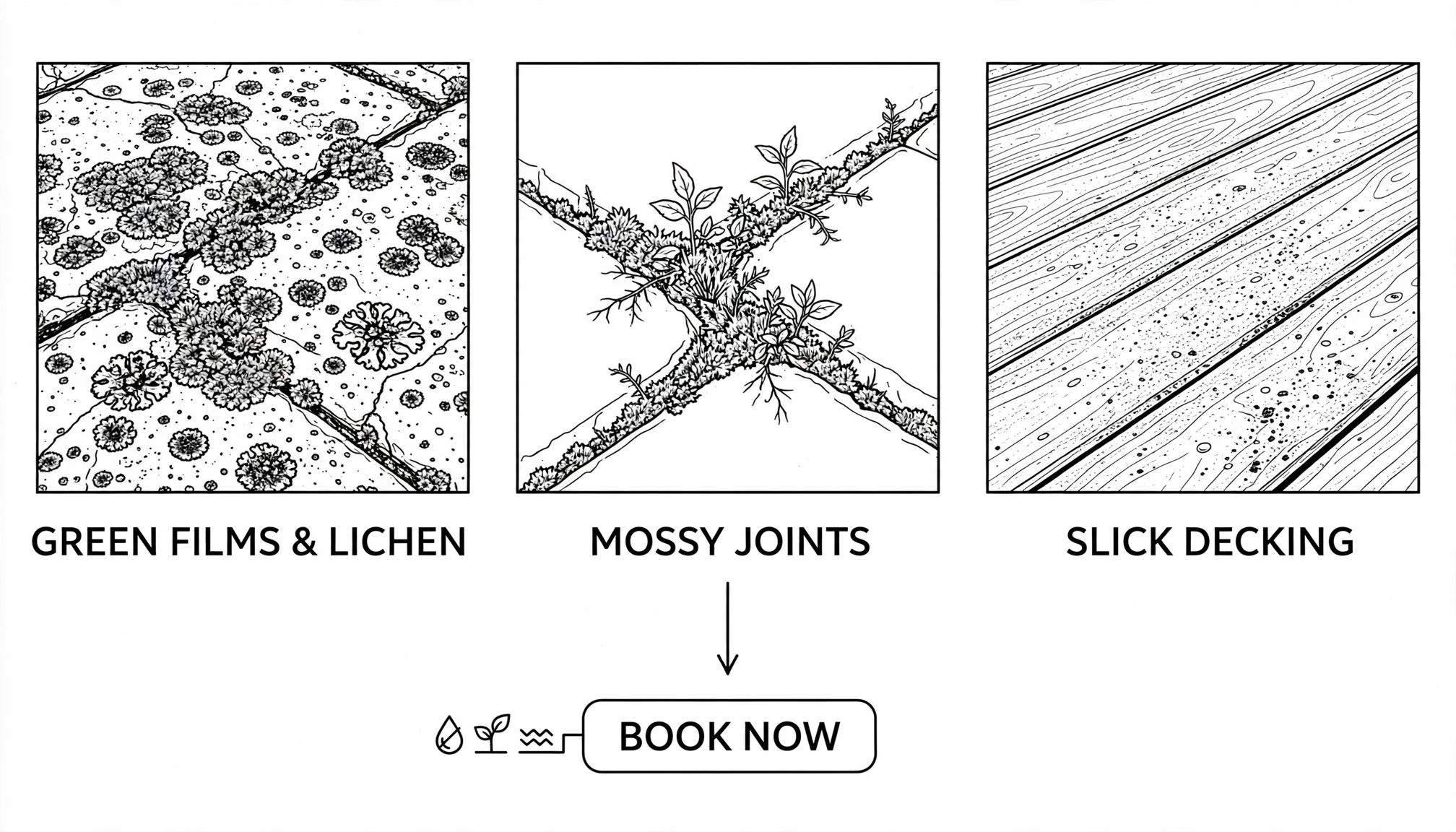
Colour change shows first. Flags turn dull and patchy, block paving darkens along joints, and oil spots stand out more as the rest greys. Then texture changes, with moss, weeds and a slight slime under shoes.
Look for these markers around drives and patios in Skipton:
- Green films or dark dots that persist after heavy rain
- Moss and weeds filling joints and holding water
- Dull, uneven colour with oil staining near parking spots
- Slick footing on patios, paths or decking when damp
- Wide joints or settled blocks that shift underfoot
A back patio in Ilkley that had never been cleaned needed a deep wash to shift built-up grime that rain had no effect on. A block paved drive with wide joints and settlement needed careful pressure so blocks stayed put while moss cleared.
Use these rules to decide timing. They link what you see to what to do next, based on how local teams triage jobs.
- If green film or black dots cover small patches, monitor to your next yearly date
- If moss fills joints or weeds root between blocks, book now before joints loosen
- If footing feels slick on steps, decking or shaded flags, book now for safety
- If oil marks and dull colour drag down the frontage before a sale or event, book now for looks
- If settled blocks or wide joints show movement, flag it at booking so technique can be adjusted
Commercial sites follow the same cues with lower tolerance. Chewing gum, moss and algae on footpaths and forecourts call for a prompt clean because the public walks there daily. The Under Pressure commercial exterior cleaning guide outlines how those high-traffic areas are handled.
What Affects Cleaning Frequency in Skipton and the Dales?
Shade sets the pace in Skipton and the Dales.
Trees, fences, walls and north-facing aspects hold moisture long after rain. That damp stretch lets moss and algae root faster, so a shaded drive or patio often needs attention months before a sunny one on the same street.
Traffic adds to the load. Cars drop oil and grit on drives, feet grind soil into paths, and nearby planting sheds leaves and pollen. Car parks, forecourts and cafe frontages soil fastest because use never pauses.
Surface type shapes both timing and method. Concrete flags and block paving take routine pressure washing with joint care. Natural stone and crazy paving need careful pressure control to protect texture and pointing. Tarmac, resin and pattern imprinted concrete need gentler settings, since harsh pressure marks the finish.
Site factors matter at quoting stage. Access to an outside tap, parking for a van with vehicle-mounted kit, drainage points and the size of the area all shape time on site. Rural plots without easy mains access may need tank-mounted options.
Tip: shorten the gap after a wet autumn if green returns by February, since early growth points to another heavy year.
Businesses with public footfall sit on the tightest cycle. Shops, cafes and playgrounds need frequent upkeep, often timed early morning or evening to keep paths open.
Pressure Washing Versus Soft Washing: Which Does Your Home Need?
Robust paving takes pressure, delicate finishes do not.
High-pressure washing uses highly pressurised water to lift dirt, grime, moss and surface staining from hard paving, concrete and tarmac. Soft washing uses lower pressure with cleaning solutions for render, roofs and cladding that could mark under a hard jet. Biocide foam follows washing to clear deep algae and black lichen spots that rinsing alone leaves behind.
| Method | Best For | Pressure |
|---|---|---|
| High pressure wash | Block paving, flags, concrete, tarmac | High |
| Soft wash | Render, roofs, cladding | Low |
| Biocide foam | Algae, black lichen spots | Rinse |
Detergents help where water alone leaves stubborn grime, such as oil edges and traffic films. Waste water control and detergent choice sit inside a professional quote, so drains and planting stay protected.
Ask for soft washing by name if your job touches render, roofing or cladding. Blasting those areas on high pressure risks marks that cost more to fix than the clean saved. Local cost advice on Checkatrade Skipton jet washing costs and hiring advice also flags why the right method matters for the final bill.
How Much Does Professional Exterior Cleaning Cost in Skipton?
£294 is the average cost of jet pressure washing in the Skipton area.
Driveway and patio cleaning averages £343. Typical ranges run from £208 to £424 for jet pressure washing and from £241 to £488 for driveway and patio cleaning, based on Checkatrade data for Skipton in North Yorkshire.
Time on site tracks size and soiling. Small jobs often take 2 to 3 hours. Medium drives and patios take 3 to 5 hours. Larger or commercial areas take longer, since access, drainage and drying checks add time.
A standard quote often covers:
- High pressure cleaning with professional-grade kit
- Waste water management on site
- Detergents where water alone falls short
- Travel and equipment setup
- Biocide foam as an add-on for deep organic staining
What moves the price is site-specific. Size, condition, surface delicacy, water access, parking and location all nudge the figure up or down. A moss-filled drive with wide joints takes longer than a yearly refresh of the same area.
Free no-obligation quotes take the risk out. You get a tailored plan for services, timing and pricing after an assessment, plus a walk-round check with touch-ups handled on the spot. If the finish falls short, the provider cleans it again at no extra cost. See current figures on Checkatrade Skipton jet washing costs and hiring advice.
How to Choose a Reliable Pressure Washing Service in Skipton
Local proof beats promises when you hire.
Start with insurance, kit and reviews. A fully insured local team with professional-grade washers, including vehicle-mounted setups, holds pressure steady across a drive. Checkatrade rates Skipton-area pressure washing services at an average of 10 out of 10 based on 121 reviews. One local Skipton team holds 83 Google reviews, which points to steady results across jobs.
Skipton also builds the machines. Landy Pressure Washers cites 46+ years of experience building washers in Skipton, much of it for farm and rural work where kit takes a beating. Teams working from that base know Dales stone, block paving and country access.
Use this checklist before you book:
- Confirm full insurance and professional-grade kit
- Read recent local reviews and ratings
- Ask how they handle delicate stone, tarmac and resin
- Ask when they use soft washing and biocide foam
- Request a free consultation and written quote
- Agree timing that limits disruption to neighbours or trade
- Confirm the walk-round check and re-clean cover
Good communication seals it. Expect a clear plan for services, timing and pricing, notes on water access and drainage, and care for planting nearby.
Skipton Exterior Cleaning Questions
How Often Should a Skipton Driveway Be Cleaned?
Most drives need a professional wash once a year. Shaded, north-facing or tree-covered drives soil faster, so pull the date forward when joints green up or colour dulls. Block paving also needs joint attention at the same visit.
How Often Does Garden Decking Need Restoration and Oiling?
Check decking each year and restore it when boards look grey, dull or slick. Restoration pairs a deep clean with two coats of quality decking oil to revive colour and guard timber. Waiting until boards turn slippery makes the job harder.
Is Washing Safe for Natural Stone, Tarmac and Resin?
Yes, when pressure and method match the surface. Natural stone needs controlled pressure to protect texture and pointing, while tarmac, resin and pattern imprinted concrete need gentler settings. Flag the surface at quoting stage so the team plans the right approach.
What Do Local Costs and Job Times Typically Look Like?
Jet pressure washing around Skipton averages £294, with a typical range from £208 to £424. Driveway and patio cleaning averages £343, ranging from £241 to £488. Small jobs often take 2 to 3 hours, while medium drives and patios take 3 to 5 hours.
When Is Biocide Foam Needed for Black Spots?
Book it when dark algae or black lichen spots stay put after rinsing. Washing lifts surface grime, then biocide foam works into pores for a deeper clear on problem areas. It suits shaded patios and paths where spots return fast.
How Do You Pick a Trustworthy Local Exterior Cleaner?
Look for full insurance, professional-grade kit and strong local reviews. Ask for a free consultation, a clear plan for services, timing and pricing, and a walk-round check with re-clean cover. Clear answers on soft washing and water control mark a careful team.
Keep Your Skipton Home Looking Its Best Year-Round
Book one inspection each year for drives, patios and decking, then act on what you see.
Green films, dark spots and slick footing mean the date should move forward. Book a free assessment through the Under Pressure Skipton service page, agree a repeat rhythm for your shade and traffic, and hold that year-round kerb appeal with less effort each time.