
Table of Contents
- Commercial Exterior Cleaning in Skipton: Key Takeaways
- What Commercial Exterior Cleaning Covers in Skipton
- Why Clean Exteriors Win Customers and Prevent Costly Damage
- Pressure Washing, Soft Washing and Steam: Which Method for Which Surface?
- How a Professional Commercial Clean Runs Without Disrupting Trade
- What Affects Cost, Timing and How to Choose a Skipton Provider
- When Should Skipton Businesses Book Exterior Cleaning?
- Skipton Exterior Cleaning: Common Questions
- Keep Your Skipton Premises Clean, Safe and Inviting
A damp Skipton morning can leave a forecourt mossy, a car park marked with oil, and signage dulled by green film. That tired look makes a well-run business feel neglected before anyone reaches the door. Commercial exterior cleaning restores shopfronts, paths and parking areas by matching the cleaning method to each surface. Checkatrade’s Skipton-area listing puts average jet pressure washing at £294. Below, you’ll find a coverage checklist, a method guide, and a plan for booking work around trade and deliveries.
Commercial Exterior Cleaning in Skipton: Key Takeaways
A clean exterior starts with a clear scope.
- Match pressure washing to durable paving, concrete, block paving and hard-standing areas with built-up grime.
- Use soft washing on render, delicate stone and roof surfaces affected by algae or staining.
- Choose steam for sensitive stone and detailed areas that need gentler treatment.
- Include shopfront glass, frames, signage, parking, footpaths, gutters and roofline in the site walk-round.
- Plan cleaning around opening hours, deliveries and visitor access.
- Book light maintenance before moss, oil film and dirt become heavy.
A short walkthrough of pressure jet washing on Yorkshire flagstone gives a useful view of the cleaning process.
The strongest booking brief names the areas to clean, the surface type, access limits and the hours when customers should not be affected.
What Commercial Exterior Cleaning Covers in Skipton
A full exterior refresh can cover the ground, frontage and roofline in one visit. Our commercial exterior cleaning service covers customer-facing areas, while Under Pressure Cleaning Services also lists exterior cleaning work in Skipton.
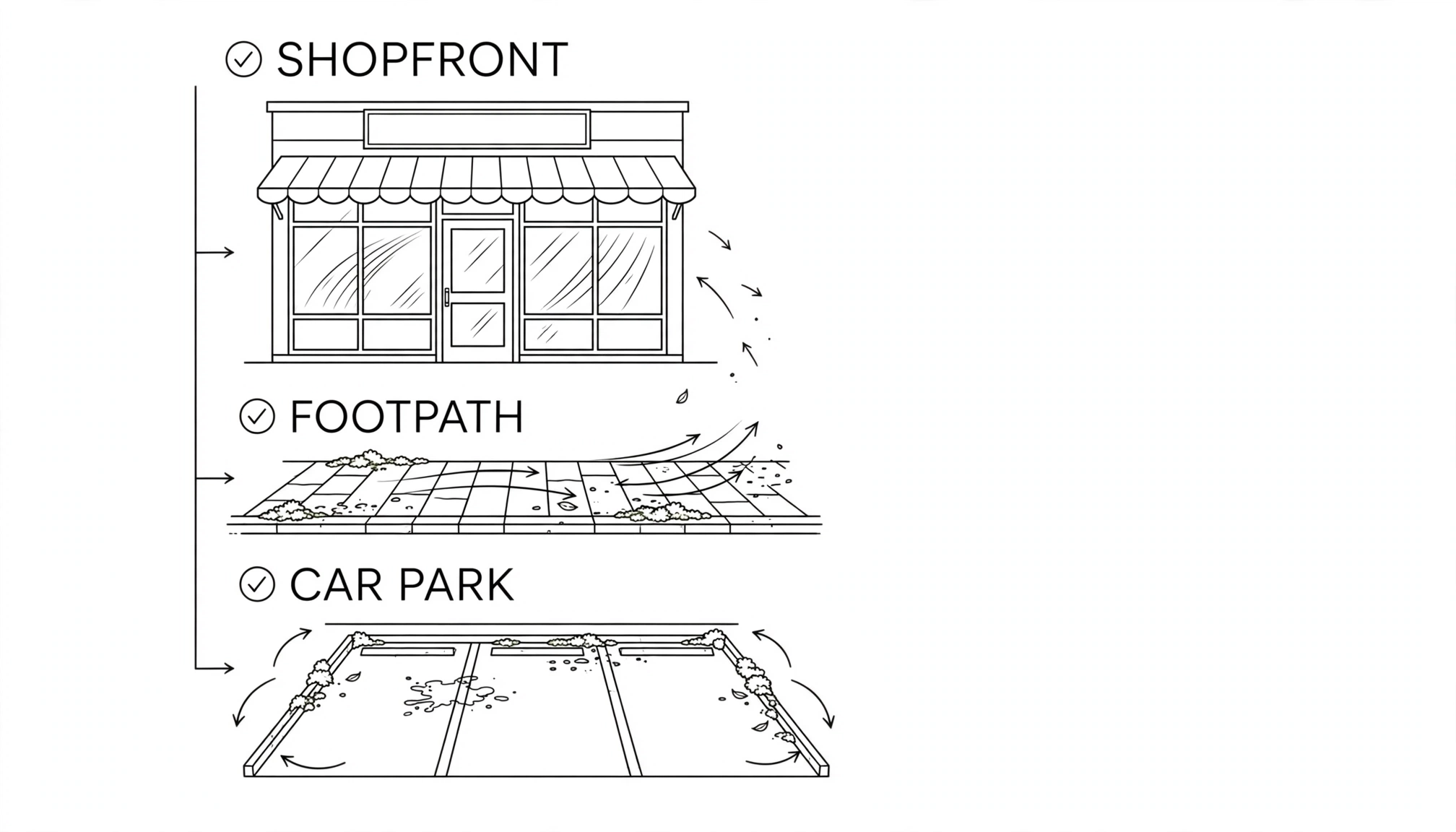
1. Shop Fronts
Shop fronts suit businesses whose glass, frames and signage shape the first view from the pavement.
Pros
- Cleans dirt and streaks from the customer-facing frontage
- Includes glass, frames and signage areas
Cons
- Does not clear oil staining in parking areas
- Does not deal with moss on access paths
Why Choose Shop Fronts Over Car Parks?
Choose shop front cleaning when the entrance and window display are the immediate concern for passing customers.
2. Car Parks
Car park cleaning focuses on the arrival area, including oil marks, moss, debris and parking bays.
Pros
- Lifts oil staining and ground-in dirt
- Clears moss and loose debris from parking areas
Cons
- Does not clean glass, frames or signage
- Needs access planning around parked vehicles
Why Choose Car Parks Over Footpaths?
Choose this work where vehicle arrival areas look unwelcoming or carry visible oil residue.
3. Footpaths
Footpath cleaning targets the walking route between the street, parking area and entrance.
Pros
- Removes chewing gum, moss, algae and dirt
- Helps keep access routes clean and even-looking
Cons
- Does not address roofline staining
- Does not remove oil marks across a car park
Why Choose Footpaths Over Forecourts?
Choose footpath cleaning where visitors walk through mossy or dirty access routes before reaching the door.
4. Forecourts
Forecourt cleaning suits entrances with stubborn staining and a large customer-facing hard surface.
Pros
- Restores the appearance of entrance paving
- Tackles dirt and stubborn staining
Cons
- Does not cover high-level fascias or gutters
- Needs the right approach for delicate stone
Why Choose Forecourts Over Shop Fronts?
Choose forecourt work when the main problem sits underfoot at the entrance rather than on the frontage.
5. Walls, Cladding and Roofline
This scope covers walls, cladding, fascias, soffits and gutter faces around the building.
Pros
- Refreshes broad frontage surfaces in one booking
- Covers areas that can soil paths below
Cons
- High-level areas can need access equipment
- Painted cladding and delicate surfaces need low-pressure care
Why Choose Walls, Cladding and Roofline Over Windows, Doors and Conservatories?
Choose this scope where staining is spread across the building fabric and roof edge.
6. Windows, Doors and Conservatories
Window, door and conservatory cleaning tidies the glass and frames visitors see at close range.
Pros
- Covers glass, frames, doors, porches and conservatories
- Helps keep customer-facing glazing tidy
Cons
- Does not remove moss from paving
- Does not clear gutters or roof moss
Why Choose Windows, Doors and Conservatories Over Shop Fronts?
Choose this work when the entrance includes glazed doors, porches or conservatory areas beyond the main shop window.
7. Driveways, Patios and Paths
Business premises with private access areas can include driveways, patios, paths and steps in the same job.
Pros
- Covers hard surfaces used by staff and visitors
- Re-sanding and sealing are available where suitable
Cons
- Does not clean upper walls or roofline
- Surface condition affects the cleaning method
Why Choose Driveways, Patios and Paths Over Car Parks?
Choose this scope for smaller access areas and outdoor spaces rather than marked vehicle parking.
8. Render and Soft Wash Cleaning
Render and soft wash cleaning is for algae and staining on render or delicate stone.
Pros
- Uses gentle low-pressure cleaning
- Treats organic staining on sensitive surfaces
Cons
- Does not suit heavy oil residue on open tarmac
- Needs cleaning solutions and biocide treatment
Why Choose Render and Soft Wash Cleaning Over Pressure Washing?
Choose soft washing where high pressure could damage render, delicate stone or painted finishes.
9. Tarmac Restoration
Tarmac restoration cleans and treats faded tarmac to bring back an even dark finish.
Pros
- Targets tired-looking tarmac areas
- Improves the appearance of vehicle approaches
Cons
- Does not replace damaged tarmac
- Does not suit stone, render or timber surfaces
Why Choose Tarmac Restoration Over Driveways, Patios and Paths?
Choose it when faded tarmac is the main visual issue around parking or access.
10. Decking and Wood Cleaning
Decking and wood cleaning lifts grime and organic growth from timber surfaces.
Pros
- Cleans timber used for outdoor seating or access
- Removes surface grime and organic growth
Cons
- High pressure can damage timber
- Does not address paving oil stains or roof moss
Why Choose Decking and Wood Cleaning Over Pressure Washing?
Choose this service for timber that needs a gentler method than durable paving.
11. Roof Cleaning and Gutter Clearing
Roof cleaning and gutter clearing deals with moss at roof level and drainage that can overflow onto clean areas below.
Pros
- Clears roof moss with follow-up biocide treatment
- Includes gutter clearing
Cons
- Needs careful access planning
- Does not clean ground-level oil staining by itself
Why Choose Roof Cleaning and Gutter Clearing Over Walls, Cladding and Roofline?
Choose it where moss and overflowing gutters are causing the visible problem.
For an accurate quote, list every area that needs attention rather than asking only for a “jet wash.”
Why Clean Exteriors Win Customers and Prevent Costly Damage
The entrance earns its keep every day. A clean frontage helps customers feel confident about walking in, while clear paths and parking areas remove the dirt that makes a site feel poorly cared for. For most Skipton premises that means the customer-facing outdoor areas people judge first, from shopfronts, car parks, footpaths and forecourts to walls, cladding, fascias, gutters, windows and hard standings, washed with pressure washing, soft washing or steam matched to the surface.
£343 average driveway and patio cleaning cost in the Skipton area, according to Checkatrade.
Safer Paths and Parking
Moss, algae, wet leaves and oil film can make footpaths and parking areas slippery. Removing them gives staff, visitors and delivery drivers a cleaner route across the site.
Car parks need the same attention as the shopfront. Oil staining, debris and moss gather in the places drivers see first, especially around edges, bays and drainage lines. Clearing that build-up keeps parking welcoming, while lifting chewing gum, moss, algae and dirt from walkways leaves a more even finish that is easier to use in wet weather.
It helps to walk the full area in daylight after a clean and check edges, corners and drainage lines, and confirm slip-prone moss and algae patches both look even and feel clean. Leaving moss, algae and oil film in place until paths turn slippery is a common reason sites start to feel unsafe, especially where leaves settle and hold moisture.
Protection for Exterior Surfaces
Regular washing removes the dirt and organic growth that sit on paving, tarmac, render and cladding. That ongoing care helps those surfaces last longer and keeps staining from becoming more entrenched.
Skipton’s wet weather, stone walls and tree cover create good conditions for green growth. Busy town routes add traffic film and dust, so exteriors soil quickly. Local stone, wet weather and tree cover call for regular light maintenance rather than waiting until build-up is heavy. Treating organic growth after washing also helps, so algae and dark lichen spots do not return quickly, with biocide foam used where deep staining remains after the main wash.
Matching the method to the surface matters more than using maximum pressure everywhere. Blasting delicate render, soft stone or timber with high pressure instead of soft wash or steam can do more harm than good, and ignoring gutters, fascias and rooflines until overflow and moss drop soil the clean areas below. Where gutters overflow, it often makes sense to combine roofline and ground-level cleaning.
| Approach | Where it fits best |
|---|---|
| Pressure washing | Hard paving, concrete, block paving and durable forecourts with heavy grime and oil residue |
| Soft washing | Render, delicate stone and roof surfaces, using low pressure with cleaning solutions and biocide |
| Steam cleaning | Delicate stone and render that needs gentler, high-temperature treatment |
Less Work for Your Team
A commercial clean uses equipment suited to large paving areas, high windows and roofline work. Rotary surface cleaners cover broad paving evenly, while reach-and-wash poles and pure water systems deal with higher glass and frames.
That leaves staff to run the premises instead of spending opening hours scrubbing paving or trying to reach fascias safely. Efficient professional kit with tailored plans saves staff time and reduces longer-term upkeep compared with in-house scrubbing, especially when work is planned around trading hours so customers and deliveries are not blocked. Eco-friendly methods with minimal disruption let trade carry on while cleaning happens, with early, late or closed-day working where the site stays busy.
A café owner preparing for a busy terrace period can arrange cleaning around trading. The entrance paving, outdoor seating area and window frames are cleaned outside customer hours, so the next service starts with a cleaner approach and clear walking routes. A similar approach was used for a cafe frontage clean in Ilkley, arranged as a commercial contract around trading. Starting with a free consultation to assess shopfront, car park, forecourt or paths helps agree priorities, then a tailored plan covers services, timing and pricing before work begins, with a quality walk-round and touch-ups on the spot.
First Impressions That Match the Business
Customers often see the forecourt, signs and glass before they meet anyone inside. Dirt on those surfaces can distract from the care taken elsewhere on site. A spotless frontage signals professionalism and invites footfall, which is why shopfronts are usually washed to lift dirt and streaks, and forecourts are treated to restore shine and tackle stubborn staining.
Combine ground cleaning with windows, roofline and signage where several areas are showing the same build-up. One planned visit also avoids repeatedly arranging access around customers and deliveries. Small business frontages can combine several services into a single exterior refresh, covering glass, frames, doors and porches alongside walls, cladding, fascias, soffits and gutter faces, with size and condition guiding time and price more than the headline service name.
Pressure Washing, Soft Washing and Steam: Which Method for Which Surface?
Choose pressure washing for durable, heavily soiled paving. Choose soft washing or steam where the surface is render, delicate stone, painted cladding or another material that needs lower force.
Under Pressure describes pressure washing work locally, while our full exterior cleaning scope covers the wider mix of hard surfaces, glazing, roofline and specialist cleaning.
| Method | Best for | Approach |
|---|---|---|
| Pressure washing | Concrete, block paving, flags, forecourts | Water pressure for grime, oil residue and dirt |
| Soft washing | Render, delicate stone, roofs | Low pressure with cleaning solutions and biocide |
| Steam cleaning | Sensitive stone, detailed areas | High-temperature vapour with gentle treatment |
| Biocide foam | Algae and dark lichen spots | Follow-up treatment after washing |
Pressure Washing for Durable Ground Surfaces
Pressure washing suits hard surfaces that can take the force, such as concrete, flags, block paving and durable forecourts. It is the direct choice for heavy grime, moss, chewing gum and oil residue on these areas.
Rotary surface cleaners help produce an even finish across larger paving areas. They work well where a shop, café or visitor site has broad paths or a parking apron that would be slow to clean by hand.
Soft Washing for Render and Organic Growth
Soft washing uses low pressure and cleaning solutions for render, delicate stone and roof surfaces. Biocide treatment after washing helps slow the return of algae and lichen spots.
This approach suits a wall with green film or a roof with moss where forceful washing would be the wrong treatment. It also fits painted cladding and other finishes that need careful handling.
Steam Cleaning for Sensitive Stone
Steam cleaning uses high-temperature vapour for delicate stone and detailed areas. It gives a gentler route for character stone that should not be hit with maximum pressure.
For older stone around a Skipton entrance, the cleaning team can assess the condition first and choose steam or a low-pressure method. The decision rests on the surface, not on getting the most force from the machine.
Match the Method to the Site
- If the area is durable paving, concrete or an open forecourt with heavy dirt, then choose pressure washing.
- If the surface is render, soft stone, painted cladding or a roof, then choose soft washing.
- If the stone is sensitive or has detailed character features, then choose steam or another low-pressure approach.
- If algae and dark lichen remain after washing, then ask for biocide foam treatment.
- If the work includes upper windows, fascias or cladding, then plan for reach poles or suitable access equipment.
A business with an oil-marked parking apron and algae on render needs two methods in one site plan. Pressure washing can handle the hard ground, while soft washing treats the render without putting the finish at risk.
The method affects the result, the preparation and the time on site. Ask the cleaning team to name the method for each surface before work starts.
How a Professional Commercial Clean Runs Without Disrupting Trade
A commercial clean should fit around the working day. The job starts with a site walk-round, then follows an agreed plan so customers, staff and deliveries keep moving.
- Walk the site. The initial consultation covers the shopfront, parking, paths, bin areas and any high-level work. It also identifies moss, oil staining, gutter overflow, sensitive surfaces and access points.
- Agree the scope. Before cleaning begins, confirm the areas included, the method for each surface, the timing and the price. This is the point to flag delivery windows, guest arrivals, closed days and outdoor water access.
- Set the working hours. Early, late or closed-day work can keep cleaning away from peak trade. Public routes and parking access need a clear plan before equipment is brought onto site.
- Clean each surface correctly. Durable paving may use pressure washing and rotary equipment, while render, stone and roofs get a lower-pressure or steam approach. Eco-friendly cleaning solutions are used where needed.
- Walk the finished area. Check edges, corners, drainage lines, windows, frames and signage in daylight. Touch-ups can be handled on the spot before approval.
- Set the maintenance rhythm. Arrange return visits around the seasons and the areas that soil fastest, such as tree-covered paths, rooflines and entrance paving.
Before the agreed date, make these practical checks:
- Clear access to shopfronts, paths, parking areas and bin stores.
- Confirm an outdoor water tap or agree another water arrangement.
- Move vehicles or agree which bays need to remain open.
- Tell staff and tenants about the working time.
- Confirm deliveries, guest arrivals and other site constraints.
- Keep the final scope in writing, including walls, glass, roofline and ground surfaces.
The final walk-round matters because small missed areas show up after surfaces dry. A good finish includes the edges people notice as they approach the premises.
What Affects Cost, Timing and How to Choose a Skipton Provider
Prices start with the site, not the service label. Area size, soil build-up, access, water supply, surface type and trading constraints all affect the work needed.
Checkatrade lists an average of £294 for jet pressure washing in the local area and £343 for driveway and patio cleaning. These are useful reference points, but a commercial quote needs the actual areas and access conditions.
What Changes the Quote
- Size and condition: A large, heavily soiled forecourt needs more work than a small, lightly marked frontage.
- Access: Restricted parking, public walkways and high-level areas change setup and working arrangements.
- Water supply: An outdoor tap, or an agreed alternative, affects the site setup.
- Surface type: Render, delicate stone and painted cladding need soft washing or steam rather than a hard-surface approach.
- Business hours: Early, late or closed-day work needs to be agreed around customers, guests and deliveries.
- Combined work: Shopfronts, ground surfaces, windows and roofline can be included in a single exterior refresh.
A quote should also state whether it covers cleaning, wastewater handling, detergents where needed, travel and equipment. Those details make it easier to compare two prices on the same basis.
Get a Quote That Matches the Job
Send clear photos of the shopfront, parking areas, paths, staining and high-level surfaces. Include a rough view of access and point out any water tap, gates, parked vehicles or delivery restrictions.
Then agree the scope in plain terms. “Front entrance” can mean paving only, or it can include glass, frames, signage, steps, gutters and the wall above it.
Choose the Team Carefully
- Ask about work on commercial premises in Airedale and Wharfedale.
- Check insurance, reviews and the provider’s guarantee.
- Confirm the method for each surface before booking.
- Ask how public areas, vehicles and access routes will be managed.
- Get the price and inclusions confirmed before the visit.
- Confirm whether touch-ups are handled after the final walk-round.
A low figure with vague scope creates problems later. A clear written plan tells you which surfaces are being cleaned, when the team will work and what the price covers.
When Should Skipton Businesses Book Exterior Cleaning?
Book before the frontage becomes a distraction. Skipton businesses get the best results by using visible triggers and seasonal moments to plan a clean. A light maintenance rhythm usually takes less effort than waiting until every surface is heavily soiled.
Before Customer-Facing Dates
Arrange exterior cleaning before a sale, letting, property photos, viewings or a guest season. A clean shopfront, clear paths and tidy glazing give visitors a better first view of the premises.
It helps to think the way builders do on new-build plots, where windows, frames and surrounding surfaces are presented clean after construction. You want the place looking settled and cared for when someone is judging it for the first time.
Summer is also a sensible point to clean terrace paving, patios and outdoor seating areas before they see more use. Combine this with window and frame cleaning if the whole frontage needs attention.
Where trade keeps going through the day, plan the clean around trading hours so customers and deliveries are not blocked. A cafe frontage clean in Ilkley, for example, was arranged around trading. Ask for early, late or closed-day working if needed, and agree timing that avoids peak trading, deliveries and guest arrivals, with clear access and an outdoor water tap agreed.
After Wet Weather and Leaf Fall
Autumn leaves, storms and winter grime can block gutters and leave paths damp and green. Book once this build-up is visible rather than waiting until access routes become heavily stained.
Tree cover and wet conditions can leave algae on stone, render and paving. Treating organic growth after cleaning helps slow its return.
This matters in Skipton because local stone, wet weather and tree cover call for regular light maintenance. Roof moss clearance followed by biocide treatment to slow regrowth is a good example. Match the method to the surface, with pressure washing for hard paving and durable forecourts, and soft washing or steam for render, delicate stone and roof surfaces. Walking the site first and agreeing exactly what is included keeps the scope clear.
Watch for These Triggers
- Gutters overflowing or moss dropping from the roofline
- Green film on render, signs or stone walls
- Slippery moss or algae on paths and entrance steps
- Oil marks and debris around parking bays
- Dull glass, dirty frames or stained signage
- Outdoor customer areas looking tired before a busy period
Where several triggers appear together, combine roofline, window and ground cleaning in one visit. That keeps access arrangements simpler and gives the whole premises a consistent finish. Small business frontages often work best this way, with walls, roofline, glass and ground surfaces agreed in one scope. Add a quality walk-round in daylight, checking edges, corners and drainage lines, and set a simple maintenance rhythm so the property stays fresh through the seasons.
Skipton Exterior Cleaning: Common Questions
What Does Commercial Exterior Cleaning Include?
Commercial exterior cleaning can cover shopfronts, car parks, footpaths, forecourts, walls, cladding, fascias, gutters, windows and hard-standing areas. The scope can also include driveways, patios, tarmac, decking and roofs where they form part of the premises. Agree the exact areas before the visit.
How Do Pressure, Soft Wash and Steam Differ?
Pressure washing suits durable paving, concrete and forecourts with heavy dirt or oil residue. Soft washing uses low pressure with cleaning solutions for render, delicate stone and roofs. Steam uses high-temperature vapour for sensitive stone and detailed areas.
Will Exterior Cleaning Disrupt My Business?
Commercial work can be arranged around business hours, including early, late or closed-day slots. The team should agree access routes, parking and delivery constraints before arriving. Clear planning keeps customer areas available where possible.
How Often Should a Business Book Cleaning?
Book light maintenance when moss, algae, oil film, leaf debris or frontage staining starts to show. Wet weather, tree cover and busy access routes can make those triggers appear sooner. A maintenance rhythm keeps grime from becoming heavy.
Do I Need to Be on Site for a Quote?
A site walk-round helps assess the surfaces, access and priorities accurately. Photos of the shopfront, parking and paths also help start the conversation. Confirm scope, timing, water access and price before the cleaning date.
Keep Your Skipton Premises Clean, Safe and Inviting
Clean shopfronts and clear paths give customers a better first view, while the right cleaning method protects paving, render, stone and roofline surfaces. Act before moss, oil film and winter grime harden into a larger job.
Request a free quote with photos of the shopfront, parking areas and paths, then agree the scope and working hours before booking.